

Ask a group of Pakistanis to name their favourite mango and you will probably get several different answers. Someone from Sindh may immediately mention Sindhri. In Punjab, Chaunsa is a familiar summer favourite. Others look forward to the intense fragrance of Anwar Ratol, the distinctive character of Langra, the soft sweetness of Dussehri or the large fruit of Fajri.
That variety is part of what makes Pakistani mangoes interesting. The Government of Punjab's Mango Research Institute lists a wide range of commercial cultivars, including Sindhari, Anwar Retual, Dusehri, Langra, SB Chaunsa, Fajri, Kala Chaunsa, Sufaid Chaunsa, Chenab Gold and Azeem Chaunsa. Pakistan Horticulture Development & Export Company (PHDEC) also identifies Sindhri, Chaunsa, Anwar Ratol and Azeem Chaunsa among the country's major mango varieties.
This guide is written for ordinary shoppers, mango lovers and anyone who wants to understand what they are buying rather than simply choosing a box because it says “premium mango.” There is no single variety that is automatically right for every person or every recipe. The better question is: what kind of mango do you want, and what are you going to do with it?
At a glance: popular Pakistani mango varieties
| Variety | General character | Good uses | Typical place in the season |
|---|---|---|---|
| Sindhri | Large, aromatic, sweet, juicy and generally low in fibre | Fresh eating, juice, shakes, pulp | Early season |
| Chaunsa | Rich sweetness, strong aroma and soft ripe flesh | Fresh eating, shakes, desserts, pulp | Mid-season |
| Anwar Ratol | Small-to-medium fruit with an intense flavour and fragrance | Fresh eating, desserts, premium servings | Early-to-mid season |
| Langra | Distinctive flavour; ripe fruit can remain greenish on the outside | Fresh eating, juice, blended drinks | Early-to-mid season |
| Dussehri | Aromatic, sweet and soft-fleshed | Fresh eating, shakes, desserts | Early-to-mid season |
| Fajri | Large fruit and later-season availability | Fresh eating, drinks, desserts | Late season |
| Sufaid Chaunsa | Chaunsa group variety with its own harvest and storage characteristics | Fresh eating, desserts, processing | Later season |
| Kala Chaunsa | Another recognised Chaunsa type | Fresh eating and seasonal use | Later season |
1. Sindhri Mango

Sindhri mango. Image source: Wikimedia Commons, used under its stated license.
Sindhri is one of the most recognisable mango varieties associated with Pakistan. Its name is closely connected with Sindh, and official Pakistani documentation describes Sindhri as a large, oval-shaped mango with a pleasantly aromatic and sweet flavour. The Trade Development Authority of Pakistan's GI specification also describes Sindhri as an early-ripening variety and documents its cultivation across mango-growing areas of Sindh and Punjab.
Visually, Sindhri is easy to recognise once you know it. The fruit is usually large and elongated, with a smooth appearance and a yellow to golden colour as it ripens. Its size makes it a popular choice for family servings, while its juicy flesh makes it useful beyond simply eating the fruit with a spoon.
For fresh eating, a properly ripe Sindhri can be very satisfying because the aroma becomes noticeable before you even cut it. For juice and shakes, the same ripe flesh can provide a strong mango base. The important point is that the ripeness of the individual fruit matters as much as the variety name. A perfectly selected Sindhri can taste very different from one that was picked too early and never developed the same flavour.
When is Sindhri available?
Harvest timing varies by growing area and year, but the Government of Punjab lists Sindhari in an early window extending from the first week of June into the first week of July. Sindh can have its own local timing because of differences in climate and growing conditions.
What is Sindhri best for?
- Fresh eating: Excellent when ripe and aromatic.
- Juice: A practical choice when you want a recognisable mango flavour.
- Shakes: Ripe soft flesh blends easily.
- Pulp: Useful where a juicy, mango-forward base is wanted.
2. Chaunsa Mango
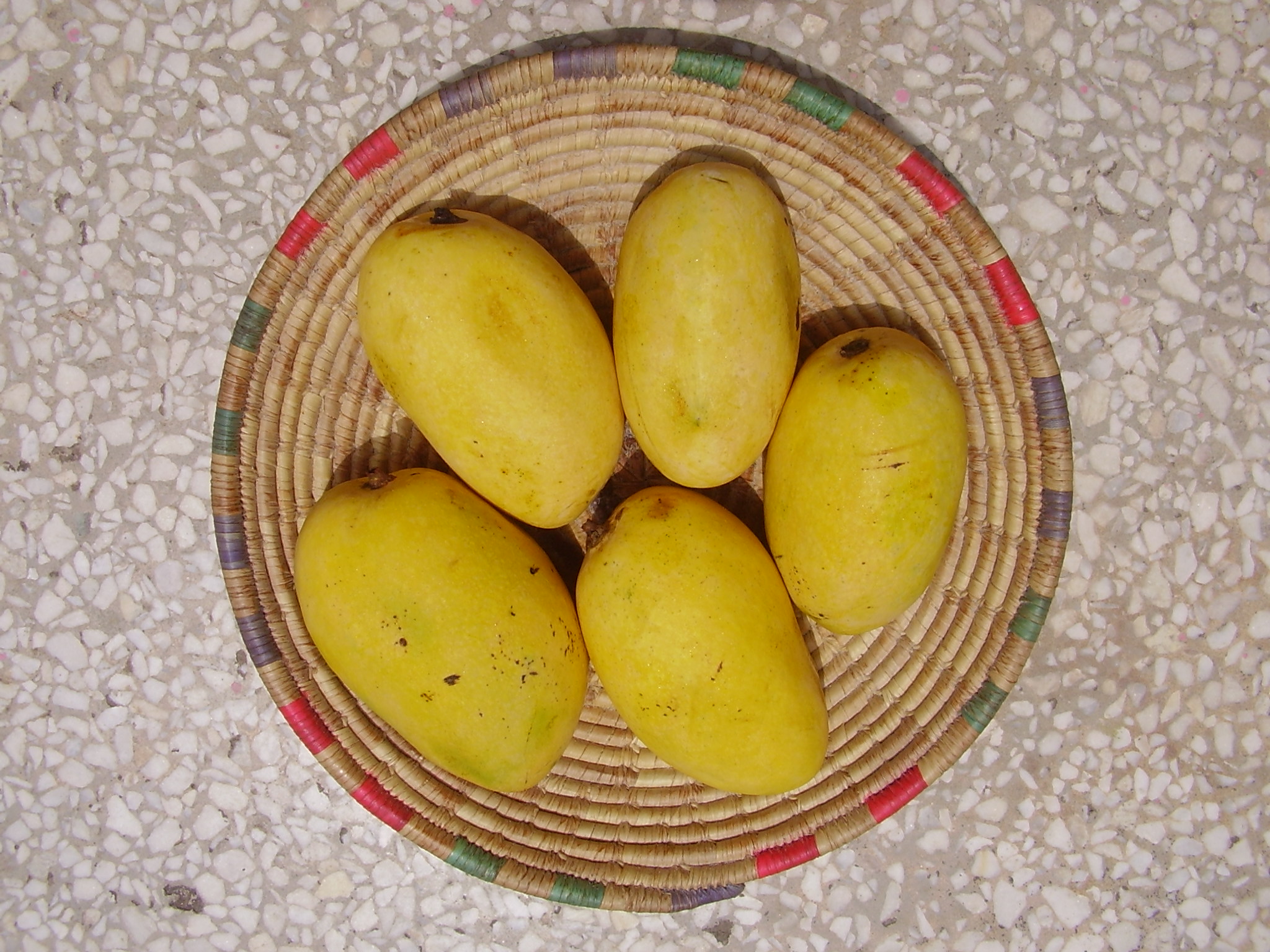
Chaunsa mango. Wikimedia Commons image by Jahanzaib Zai, available under CC BY-SA 3.0.
Chaunsa is one of the most famous names in the Pakistani mango market. It is strongly associated with Punjab and is especially valued for sweetness, aroma and the soft texture of ripe flesh. PHDEC identifies Chaunsa as one of Pakistan's major mango varieties, while the Government of Punjab lists SB Chaunsa, Kala Chaunsa, Sufaid Chaunsa and Azeem Chaunsa among the varieties in the Mango Research Institute's catalogue.
One reason Chaunsa has such a strong reputation is its versatility. A ripe Chaunsa can be eaten fresh, used in a shake, blended into a smoothie, added to desserts or used as a base for thicker mango preparations. The aroma is also an important part of the experience: when the fruit is ready, the smell around the stem can become noticeably sweet and fragrant.
Chaunsa is often discussed as though it were a single identical fruit everywhere, but shoppers may encounter different Chaunsa types and grades. Summer Bahisht Chaunsa, Sufaid Chaunsa, Kala Chaunsa and Azeem Chaunsa are all names found in Pakistani agricultural material. Their harvest periods and characteristics are not necessarily identical, so the exact name matters when comparing boxes or orchard produce.
What is Chaunsa best for?
- Eating fresh: A classic choice for people who enjoy sweet, aromatic mangoes.
- Mango shakes: Soft ripe flesh can produce a rich blended drink.
- Desserts: The aroma works well in ice cream, custards and mango cream.
- Pulp and puree: Ripe fruit can be blended for recipes where a concentrated mango taste is wanted.
When does Chaunsa arrive?
The Government of Punjab lists SB Chaunsa from roughly the second week of July to the first week of August. Other Chaunsa types can have different windows, including later varieties. This is one reason mango season in Pakistan feels like a sequence of varieties rather than one short period.
3. Anwar Ratol
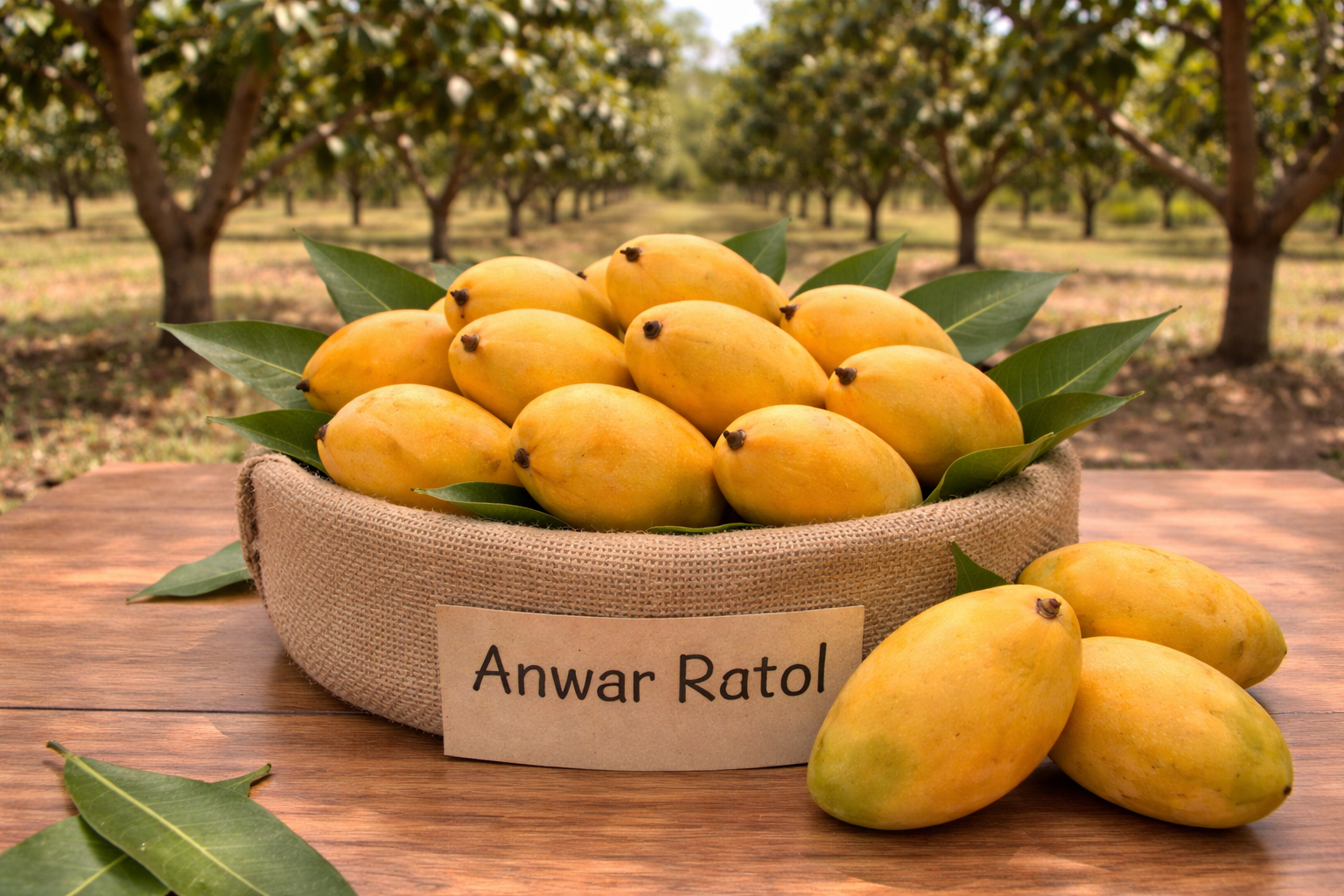
Anwar Ratol mangoes. Image source: PakYields.
Anwar Ratol is a variety many mango lovers seek specifically for its fragrance and flavour. It is generally smaller than the large mangoes that dominate supermarket displays, but size is not a reliable measure of eating quality. Anwar Ratol is included among the country's major mango varieties by PHDEC, and the Government of Punjab's Mango Research Institute describes its salient feature as excellent flavour.
This is a good example of why “biggest mango” and “best mango” are not interchangeable ideas. A smaller fruit with a strong aroma can be more interesting to someone who cares about flavour intensity than a much larger fruit that is still underripe.
Anwar Ratol is particularly enjoyable as a fresh-eating mango. Because its appeal is closely tied to aroma and flavour, buying ripe fruit is important. If the fruit has little smell and feels extremely hard, it may not yet be at the stage where the variety shows its full character.
How to enjoy Anwar Ratol
Serve it chilled or at a comfortable room temperature, depending on your preference. It can also work in desserts where the mango itself is supposed to provide most of the flavour. For a drink, it can be blended with water, milk or yogurt, but many people prefer to eat it fresh so the aroma remains the focus.
4. Langra Mango

Langra mango. Wikimedia Commons image, used under its stated Creative Commons license.
Langra has one of the most recognisable names in the mango world and is also part of Pakistan's commercial mango landscape. The Government of Punjab lists Langra among the varieties grown across the mango region and gives it an early-to-mid-season harvesting window.
One useful thing to know about Langra is that colour can be misleading. Unlike mangoes that become strongly yellow or orange as they ripen, Langra can retain a greenish skin. That means a shopper who judges every mango by yellow colour alone can easily misread the fruit.
Use the combination of aroma, gentle softness and the expected variety characteristics instead. When cut open, ripe mango flesh should have the texture and aroma you would expect rather than being unusually hard, sour or watery.
Is Langra good for juice?
It can be. Langra's distinctive flavour makes it interesting for people who want something different from a very sweet, neutral mango drink. For a fresh juice, blend ripe flesh and adjust water and sweetness to taste. For a shake, use chilled milk or yogurt if that suits the recipe.
5. Dussehri Mango

Dussehri mango. Wikimedia Commons image, used under its stated license.
Dussehri is another familiar name in Pakistan's mango market. The Government of Punjab lists Dusehri among the commercial varieties in its Mango Research Institute catalogue and gives it an early-to-mid-season harvesting window. The institute's listed salient feature is the long productive life of the tree, while consumers commonly know Dussehri for its aromatic, soft and sweet fruit.
Dussehri is a natural fit for people who enjoy fragrant mangoes and soft flesh. It can be eaten fresh, chopped into desserts or blended into a shake. As with every mango, the final result depends on harvest maturity, storage and ripening rather than the variety name alone.
Dussehri for desserts
If you are making mango cream, custard, ice cream toppings or a simple bowl of mango and yogurt, aromatic ripe fruit can make a noticeable difference. You do not need a complicated recipe: peel the mango, remove the stone, cut the flesh and chill it before serving. For a shake, blend the flesh with chilled milk and adjust sweetness after tasting.
6. Fajri Mango

Fajri mangoes growing on a tree. Image source: Fruveza.
Fajri is especially interesting because it helps extend the mango season later into the year. The Government of Punjab lists Fajri with a harvesting window from approximately the second week of August into the second week of October and notes its popularity in Khyber Pakhtunkhwa.
Fajri is also known for its large fruit. That can make it attractive for family servings and recipes where you want a generous amount of mango flesh. A large fruit, however, should still be judged by ripeness and quality. Size alone does not guarantee sweetness.
Because Fajri arrives later than some of the better-known early varieties, it can be a useful option for people who want to keep enjoying fresh Pakistani mangoes after the first part of the summer has passed.
7. Sufaid Chaunsa
Sufaid Chaunsa (White Chaunsa). Image source: Pakistani Mango.
Sufaid Chaunsa is one of the Chaunsa types recognised by the Government of Punjab. The Mango Research Institute lists it with a later harvesting period and notes excellent on-tree storage as one of its salient features.
For consumers, the important lesson is that “Chaunsa” does not always mean exactly the same fruit. If you see Sufaid Chaunsa, Kala Chaunsa or Azeem Chaunsa on a seller's listing, the name is telling you something about the cultivar rather than simply describing the colour of the mango.
8. Kala Chaunsa and Azeem Chaunsa
Azeem Chaunsa. Image source: Pakistani Mango.
Kala Chaunsa and Azeem Chaunsa are further examples of the diversity within Pakistan's commercial mango varieties. The Government of Punjab lists Kala Chaunsa with a later harvesting period and Azeem Chaunsa as another registered variety in its catalogue. Azeem Chaunsa is listed with a September-to-October harvesting window.
These varieties are useful reminders that the Pakistani mango season does not end when one famous Chaunsa window finishes. Different cultivars can continue appearing, depending on the growing region, orchard practices and year.
9. Chenab Gold and other varieties

Chenab Gold mango. Image source: DHA Multan Mango.
If you go deeper than the names most shoppers see at a fruit stall, the list becomes much longer. The Mango Research Institute catalogue includes Chenab Gold, Yakta, Retual 12 and other cultivars. Chenab Gold is listed with a July-to-August harvesting period, while Yakta is listed around the end of June and Retual 12 in a later window.
This wider selection matters to growers, researchers, wholesalers and exporters because different cultivars can have different maturity periods, yield characteristics, fruit quality and post-harvest behaviour. Punjab's Mango Research Institute also conducts research on maturity, fruit quality, post-harvest handling and specific cultivars including Sindhri, Sufaid Chaunsa, Azeem Chaunsa and Retaul Late.
Why mango variety changes the eating experience
It is tempting to think that every mango is basically the same fruit with a different name. In practice, variety can influence several things that you notice immediately:
- Aroma: Some mangoes become intensely fragrant as they ripen, while others have a milder smell.
- Texture: Some have very soft flesh; others can feel firmer or have more fibre.
- Sweetness: Natural sugar levels vary with cultivar and maturity.
- Acidity: Some mangoes retain more tang, especially at certain stages of ripening.
- Flesh yield: Fruit size and stone size both affect how much usable flesh you get.
- Season: Early and late cultivars spread the mango harvest across several months.
- Appearance: Skin colour is not a universal ripeness test. Langra is a good example.
Official agricultural research reflects this complexity. Punjab's Mango Research Institute specifically studies heat units required for maturity, fruit quality, post-harvest handling and cultivar performance. In other words, “ripe mango” is not simply a matter of waiting until every mango turns the same colour.
How to choose a ripe mango in Pakistan
Whether you are buying Sindhri from a fruit market or a box of Chaunsa from a farm seller, use several signs together.
1. Smell the stem end
A ripe mango often develops a sweet, characteristic aroma around the stem. If there is almost no smell, the fruit may need more time. If the smell is alcoholic, fermented or unpleasant, the fruit may be overripe or damaged.
2. Check gentle softness
Hold the mango in your palm and press very gently with your fingers. A ripe mango often gives slightly. Do not squeeze hard: pressure marks can bruise the flesh and make a perfectly good mango deteriorate faster.
3. Do not rely only on colour
Colour is useful for some varieties but unreliable as a universal rule. Langra can remain greenish even when ripe, while other varieties become noticeably yellow. The variety, aroma and softness should all be considered together.
4. Inspect the skin
Avoid fruit with extensive mould, leaking juice, deep bruises or damaged areas. A few small natural marks are not automatically a problem, but large soft patches can indicate internal damage.
5. Think about when you will eat it
If you need mangoes today, choose fruit that is already at the desired ripeness. If you are buying several days ahead, slightly firmer mature fruit may be more practical because it can continue ripening at home.
Which Pakistani mango is best for eating fresh?
For fresh eating, the choice is mostly personal. Chaunsa and Sindhri are natural choices for someone who wants a sweet, aromatic mango. Anwar Ratol appeals to people who specifically enjoy intense flavour and fragrance. Dussehri is another good option for those who prefer soft, aromatic fruit.
There is no reason to reject a variety simply because another variety is more famous. The best mango for your table is the one that matches your preferred sweetness, texture and aroma and is properly ripe when you eat it.
Which mango is good for juice?
For fresh mango juice, look for ripe, juicy fruit with a strong natural aroma. Sindhri and Chaunsa can work very well because ripe flesh blends into a rich mango drink. Langra is worth trying if you prefer a more distinctive flavour profile.
For a simple homemade juice, peel the mango, remove the stone and blend the flesh with chilled water. Taste before adding sugar because mango sweetness changes from fruit to fruit. If the drink is too thick, add more chilled water gradually. If it is too sharp or not sweet enough, adjust the sugar in small amounts.
Which mango is best for a shake?
For a shake, choose mangoes with soft ripe flesh. Chaunsa, Sindhri and Dussehri are practical choices. Blend the mango with chilled milk or yogurt and adjust sweetness after blending.
If you are making shakes commercially, consistency becomes even more important. Fresh mango changes throughout the season, so the exact taste and texture can vary between batches. A prepared mango drink premix is a different type of product and can be useful when you need a repeatable drink preparation rather than depending on the ripeness of individual fruit.
Fresh mango vs mango pulp vs mango drink premix
These terms are often mixed together online, but they describe different things.
| Product | What it means | Typical use |
|---|---|---|
| Fresh mango | Whole mango fruit that is peeled and eaten or processed | Fresh eating, shakes, juice, desserts |
| Mango pulp | Mango flesh processed into a pulp or puree | Drinks, desserts, food processing |
| Mango drink premix | A prepared drink base designed to be mixed according to instructions | Consistent preparation of mango drinks |
If you are buying a product labelled mango premix, read the ingredient list and preparation instructions. A premix should not automatically be described as the same thing as fresh mango or 100% mango pulp. Product composition varies by manufacturer and product, so the label is the correct place to check.
How Pakistani mango season moves through the country
One of the most interesting things about Pakistani mangoes is the way different cultivars extend the season. Official Punjab agricultural data lists early varieties such as Sindhari, Anwar Retual, Dusehri and Langra around June and July; SB Chaunsa follows in July and early August; Fajri, Kala Chaunsa and Sufaid Chaunsa are listed later; and Azeem Chaunsa appears even later in the catalogue.
That does not mean every city receives every variety on exactly those dates. Weather, orchard location, harvest decisions, transport and market supply all affect what shoppers actually see. Think of official harvesting windows as a useful guide rather than a guaranteed delivery calendar.
PHDEC identifies major mango production areas across Punjab and Sindh, including Multan, Bahawalpur, Rahim Yar Khan, Vehari, Muzaffargarh, Mirpur Khas, Tando Allah Yar, Khairpur and other districts.
Why Multan and Sindh are so closely linked with Pakistani mangoes
When people talk about Pakistani mangoes, two broad production regions appear again and again: Punjab and Sindh. PHDEC identifies both provinces as major mango production areas. Multan and surrounding South Punjab districts are strongly associated with Chaunsa and several other varieties, while Sindh is particularly associated with Sindhri and other cultivars.
The result is not simply a regional rivalry. It gives consumers a longer season and a wider selection. A mango lover can enjoy an early Sindhri, move into other varieties, then look forward to later cultivars such as Fajri and late Chaunsa types.
What makes a mango good for a recipe?
When choosing mangoes for cooking or drinks, think beyond the variety name. A recipe may need one or more of the following:
- Strong aroma if the mango flavour needs to stand out after mixing.
- Soft flesh for easy blending.
- Good flesh yield if you need a larger amount of usable mango.
- Balanced sweetness so the finished drink does not require excessive added sugar.
- Low fibre if you want a particularly smooth drink.
For a home kitchen, the easiest approach is often simply to use ripe seasonal fruit and taste as you go. For larger-scale preparation, repeatability becomes more important, which is why processed pulp and drink bases are common in food service and manufacturing.
Common mistakes people make when buying mangoes
Mistake 1: Choosing only by size
A huge mango can be excellent, but size does not guarantee flavour. Variety, maturity and handling all matter.
Mistake 2: Choosing only by colour
Not every ripe mango becomes bright yellow. Langra is a useful reminder to use smell and texture as well.
Mistake 3: Buying fruit that is too hard for immediate use
If you plan to eat the mango tonight, very firm fruit may disappoint. Ask yourself whether you need ripe fruit now or fruit that can ripen over the next few days.
Mistake 4: Assuming every Chaunsa is identical
Different Chaunsa types exist. If the seller gives a specific cultivar name, it is worth paying attention to it.
Mistake 5: Ignoring storage
Once mangoes are ripe, excessive heat can accelerate deterioration. Handle them gently and use refrigeration when appropriate for your situation and the seller's storage guidance.
How to store mangoes at home
Storage depends on how ripe the fruit is. Firm mature mangoes are commonly kept at room temperature while they ripen. Once they reach the eating stage, refrigeration can slow further softening. Cut mango should be placed in a clean, covered container and refrigerated.
Avoid repeatedly squeezing the same fruit to check whether it is ready. Frequent pressure can bruise the flesh. Instead, check it gently once or twice a day and use the aroma and texture as your main signals.
Pakistani mango varieties: a practical comparison
| If you want... | Varieties worth exploring | Why |
|---|---|---|
| A classic sweet mango | Chaunsa, Sindhri | Both are widely recognised for sweetness and aroma. |
| Strong fragrance | Anwar Ratol, Chaunsa, Dussehri | Aromatic character is a major part of their appeal. |
| A large fruit | Sindhri, Fajri | Both are known for comparatively large fruit. |
| A distinctive green-skinned ripe mango | Langra | Skin colour can remain greenish at ripeness. |
| A later-season option | Fajri, later Chaunsa types | These can appear later in the official harvesting calendar. |
| Juice or blended drinks | Sindhri, Chaunsa, Langra | Ripe flesh can provide strong mango flavour and blend well. |
| Desserts | Chaunsa, Dussehri, Anwar Ratol | Aromatic ripe flesh works naturally in sweet dishes. |
Frequently asked questions about Pakistani mango varieties
Which mango is most famous in Pakistan?
Chaunsa and Sindhri are among the best-known Pakistani mango varieties. PHDEC lists both among the country's major mango varieties, alongside Anwar Ratol and Azeem Chaunsa.
Which Pakistani mango is best for a shake?
Ripe Chaunsa, Sindhri or Dussehri can work very well for a shake. Choose soft fruit with a strong aroma and adjust milk, water and sweetness according to the fruit.
Is Langra mango green when ripe?
Langra can retain a greenish appearance when ripe, so colour alone should not be used to judge it. Aroma and gentle softness are more useful together with knowledge of the variety.
Which mango comes early in the season?
Harvest timing varies by region, but the Government of Punjab lists Sindhari among the early varieties, with Anwar Retual, Dusehri and Langra also appearing in the early-to-mid-season group.
Which mango comes late in the season?
Fajri, Kala Chaunsa, Sufaid Chaunsa and Azeem Chaunsa are among the later varieties listed in the Government of Punjab catalogue, with exact windows depending on the cultivar and growing conditions.
Are Sindhri and Chaunsa the same mango?
No. They are different mango cultivars with different characteristics and harvest periods. Sindhri is strongly associated with Sindh and is generally an earlier variety, while Chaunsa is strongly associated with Punjab and includes several recognised types.
Is a bigger mango always better?
No. Size is only one characteristic. Aroma, sweetness, texture, maturity, fibre and usable flesh all affect the eating experience.
Why do some mangoes taste different even when they have the same name?
Fruit can vary because of cultivar selection, orchard conditions, maturity at harvest, ripening, handling and storage. Even within the same variety, one batch can taste different from another.
Final thoughts: choosing the right Pakistani mango
Pakistan's mango culture is much richer than a simple list of “best mangoes.” Sindhri brings an early-season, large and aromatic option. Chaunsa offers a famous sweet and fragrant profile with several recognised types. Anwar Ratol is sought after for flavour and aroma. Langra stands out for its distinctive character and greenish appearance at ripeness. Dussehri is valued for its soft, aromatic fruit, while Fajri helps carry the season into a later window.
The most useful rule is simple: choose the variety for the experience you want, then choose the fruit for its ripeness and condition. If you want to eat mangoes fresh, focus on aroma and texture. If you want juice or a shake, look for ripe, juicy flesh that blends smoothly. If you want a dessert, a fragrant variety can make a simple recipe taste much better.
And if you are buying processed mango products, remember that fresh mango, mango pulp and mango drink premix are different products. Check the ingredient list, preparation instructions and product description rather than relying only on the word “mango” on the front of a package.
Pakistan's mango season changes from one variety to another, giving shoppers many chances to try something new. That is perhaps the best part of the whole experience: there is no need to stop at one variety. Try Sindhri when it arrives, look for Chaunsa when its season begins, sample Anwar Ratol or Langra for a different flavour, and explore later-season varieties such as Fajri and the later Chaunsa types.
Research sources: Pakistan Horticulture Development & Export Company (PHDEC), Government of Punjab Agriculture Department / Mango Research Institute, and the Trade Development Authority of Pakistan's Sindhri GI specification. Harvest windows can vary by region and season, so the dates in this guide are general agricultural references rather than guaranteed market availability. Images are credited beside the relevant variety; image licensing and source details should be checked on the original source page before reuse outside this website.